Garment Dyeing
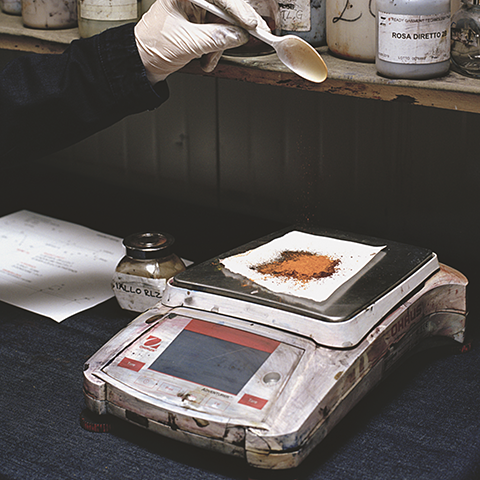
Garment dyeing is the name given to a process pioneered by Massimo Osti and his collaborators for C.P. Company in the early 1970s, in which a garment, usually made from white or raw, uncoloured fabric, is dyed only as a final manufacturing step, after being fully fashioned. While the technique of garment dyeing had long existed, Osti and his collaborators were the first to apply it to garments made from multiple fabrics or fibre types. This process creates a chromatic depth and intensity impossible to achieve with pre-dyed fabric while also enhancing the material characteristics of the textile.
Over the years, garment dyeing has become a key feature of C.P. Company, with designers continuously pushing its boundaries. In 2005, the Italian brand was the first to apply garment dyeing to GORE-TEX, a technique introduced by designer Alessandro Pungetti, marking a significant milestone. This pioneering spirit lives on today as the brand continues to experiment with an extensive range of garment dyeing techniques.
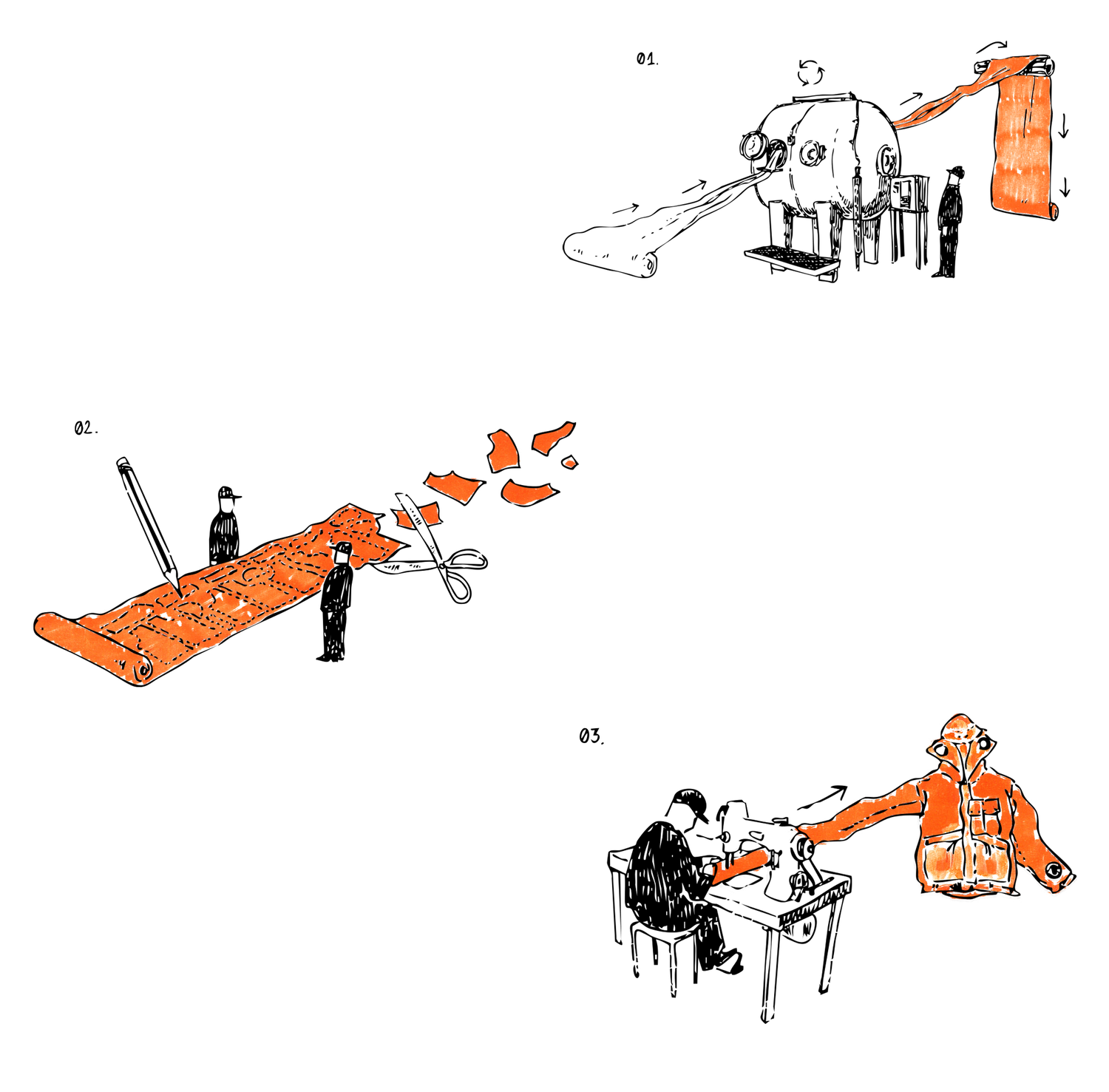
PIECE DYEING
The process begins with a roll of fabric that is fully dyed (image 01). The fabric is then unrolled and carefully cut into individual pieces, preparing the components for garment construction (image 02). These pieces are sewn together to create the finished garment (image 03).
GARMENT DYEING
The process begins with the cutting of a white roll of fabric ready for dyeing (image 01). The fabric pieces are sewn into the finished garment in its undyed white state (image 02). The completed garment is dyed, a step that requires exceptional technical expertise due to varying shrinkage percentages across different fabrics (image 03).